
More Information
Submitted: March 03, 2026 | Accepted: March 23, 2026 | Published: March 24, 2026
Citation: Nowroozi M. Solution of Diseases by Bloodletting and Controlling of Laboratory Diagnosis Results. Adv Treat ENT Disord. 2026; 10(1): 004-012. Available from:
https://dx.doi.org/10.29328/journal.ated.1001018
DOI: 10.29328/journal.ated.1001018
Copyright License: © 2026 Nowroozi M. This is an open access article distributed under the Creative Commons Attribution License, which permits unrestricted use, distribution, and reproduction in any medium, provided the original work is properly cited.
Keywords: Bloodletting; Cupping therapy; Wet cupping; Wet cupping treatment; Diseases
Abbreviation: BL: Bloodletting; CPT: Cupping Therapy; CP: Cupping; DC: Dry Cupping; WCP: Wet Cupping; WCPT: Wet Cupping Treatment

Solution of Diseases by Bloodletting and Controlling of Laboratory Diagnosis Results
Mahdi Nowroozi*
Faculty of Medical Laboratory Technology, Khatam Al-Nabieen University, Kabul, Afghanistan
*Corresponding author: Mahdi Nowroozi, Faculty of Medical Laboratory Technology, Khatam Al-Nabieen University, Kabul, Afghanistan, Email: [email protected]
A basic component of complementary and alternative medicine, bloodletting is also referred to as blood cupping (CP) or cupping therapy (CPT) and blood-letting puncture (CP), which refers to a superficial needle prick in the skin. In East Asia, BL or CPT is a non-medical treatment that is referred to as traditional therapy. Insulin-resistant iron overload syndrome, ischemic stroke, hemochromatosis, iron, external rheumatism, psoriasis, metabolic syndrome, and mental pain in patients with migraine porphyria cutanea-tarda, diabetes, fever, infections, and bronchopneumonia are among the various diseases for which BL is currently used. By using mechanical pressure under vacuum to influence local soft tissue microcirculation, BL improves capillary vascular permeability, increases regional blood circulation flow, stimulates the immune system for feedback control, and improves metabolism. The effectiveness of BLT in various therapies varies depending on the conditions and diseases. The results of laboratory assays indicated the effectiveness of BLT in diseases, and the meta-analysis’s showed that it is an assessment, controlling, and less side effect method than other medical methods. The various types of articles in therapy by the association of BL, titled, studied: for instance, may be helpful as a complementary therapy for acute stroke and eye drops, while BLT may boost lead absorption by lowering iron serum.
Wet-cupping therapy (WCT) is one of the oldest known medical techniques, used as a traditional and complementary therapy with a wide application all around the world for general health [1,2]. Bloodletting cupping is a traditional alternative medicine practiced bloodletting cupping (BLC) therapy in different cultures such as Turkish, Greek, China, Arab, and Persian and can be traced back to more than 2000 years [3]. Bloodletting is also known as blood Cupping (CP) or cupping therapy and blood-letting puncture, cupping after referring to a superficial needle prick in the skin, which is a fundamental of complementary alternative medicine [4-6]. BL- by CP enhances the therapeutic effects of blood CP. It treats diseases by unblocking the meridians, blood, and Qi. Cupping therapy is an ancient treatment that is still widely used, especially in the Middle East countries [7], Africa, United Kingdom [4] and East Asia [8]. CPT is a popular intervention for improving muscle recovery and reducing muscle stiffness in healthy individual [9]. Throughout the world, traditional medicine frequently employs BL, a non-pharmacological therapy that is still practiced in modern medicine as venesection and hemodilution [10]. Hemochromatosis [11], diabetes, porphyria cutanea-tarda, insulin-resistant iron overload syndrome, fever, infections, bronchopneumonia, and the iron accumulation hypothesis are just a few of the many illnesses that are still often treated with BL [8].
Additionally, CPT stimulates the body’s immune response for feedback regulation, improves capillary vascular permeability, increases regional blood circulation flow, and improves metabolism by using mechanical pressure under vacuum to affect local soft tissue microcirculation [5,12]. The additional impact of CP may encourage metabolism to rise even more, leading to both local and systemic regulatory effects. It is mostly used to treat sprains or injuries to soft tissues, lower back discomfort, pain from external rheumatism, etc. Psoriasis is commonly treated with BL and CP because of their greater and comparatively faster efficacy, ease of use, short treatment duration, lack of side effects, and reduced cost [5]. It is not recommended to use the procedure on individuals who have anemia, are prone to bleeding, or have large blood arteries [5,13]. Several articles have been published on different types of diseases, such as the anti-obesity effect of cupping therapy [14], hemochromatosis due to elevated blood lead concentration [11], Cerebral Infarction and Infectious Endocarditis Subarachnoid Hemorrhage [15], and Pancreatitis [16]. In this review article examines a wide variety of ailments by reviewing numerous approaches in various settings in to better determine the benefits and effectiveness of BL treatment in various diseases.
What is cupping
In Persian medicine, CPT is a popular manual technique that is used to treat various illnesses [17]. WCP [18] and DC are the two main categories [17]. Applying negative pressure by sucking on the skin without allowing blood flow is known as a dry cupping therapy [17,19]. In contrast, WCP uses BL, similar to leech therapy and venesection (Fasd). According to Persian medicine, WCPT entails briefly suctioning the clogged skin to promote BL after superficial scarification [20]. Previous studies have shown that WCPT is a useful treatment approach for a number of ailments, such as osteoarthritis of the knee, carpal tunnel syndrome, herpes zoster, neck discomfort, and low back pain [21-24]. People from all walks of life have adopted this therapeutic approach. Numerous practitioners have included cupping treatment in their therapeutic practices because of its many benefits, including wide and simple application, high effectiveness, affordability [25], and safety, taking into account [17]. The advantages of WCPT for respiratory conditions have been documented in previous research [17,26,27].
Wet cuppings in the past
Al-hijamah, also known as “wet cupping,” is a medicinal method that has been used for centuries in a variety of civilizations [26,28]. Al-Hijamah is a common medical practice in Islamic countries because the Islamic prophet “Mohammed, “peace be upon him, encouraged it [4]. As stated in a “Hadith” story, “The best medicine you may treat yourselves with is Hijamah.” Because of this, the hijamah is regarded by Muslims as “prophetic medicine.” This probably explains why this behavior has become widespread [4]. To collect tiny quantities of blood from the body, suction cups are applied to the skin surface, creating a vacuum effect [28]. Removing the collected blood has been regarded to enhance the feeling of well-being and restore equilibrium because it is believed to contain toxins [29]. The has a lengthy history dating back to the beginning of health practices in Asia, the Middle East, and other ancient countries.
Since its inception by the Egyptians around 1550 BC [26], many civilizations have made use of the WCP.
Such methods have always focused on eliminating toxins from the body by drawing blood, which is thought to include a number of contaminants that cause infection and sickness and may aid in the healing process [27,30].
The first step of treatment was to make tiny skin incisions inside the boundaries of the cup implantation. The cup is positioned against the skin to create a seal once the micro-incisions are made, creating a partial vacuum effect that pulls blood from the skin into the cup [28]. Depending on the intended purpose or specific condition, there are significant variations in the number of cups and overall surface area across which the treatment is performed [1]. These cups are usually placed on the skin’s surface for a few minutes to enable the regulated extraction of a small amount of blood into each cup. Owing to the ability of the procedure to relieve pain, WCP procedures have been used in a variety of settings for a wide range of ailments. Additionally, this technique has been used to treat respiratory problems, as well as other general symptoms of sickness and illness [31]. Patients with migraines have been successfully treated with WCP [32]. In fact, it has become more credible in contemporary medicine.
Although its acknowledged therapeutic potential is becoming better known, the processes underlying these healing methods still require investigation within the framework of conventional research. WCP have demonstrated extraordinary effectiveness in fostering enhanced physiological functioning, leading to considerable health benefits. This is because they are based on beliefs that focus on cleaning and purging the blood of waste products and toxins. However, considering the small amount and anecdotal data supporting the effectiveness of this treatment in treating thyroid disorders, a critical eye in the literature in this field of study is still required [33].
Wet-cupping therapy procedure
Cupping, a procedure for physical stimulation of the skin, has been practiced for thousands of years, especially in East Asian and Islamic cultures [34]. Today in medical procedure is in following steps. Before this, the patient needs to receive information about the application of the procedure [25]. Therapy was accepted by a nurse practitioner at a suitable place. Before the procedure, the room temperature of the clinic was measured and adjusted between 20 and- 25 ℃ to eliminate vasoconstriction caused by cool weather, which may negatively impact BL. TO avoid hypotension, the legs should be raised after the patients lie down on the bed in a propped-up position. A disposable cup of 100ml, the area on the skin was sterilized with 70% ethanol. The procedure was applied at four sites. Two sites in the inter-scapular region, up to the 7th cervical vertebra, and between the scapulae, and two other sites were located at the sides of the back of the neck. The cups were placed using a manual suction pump [25]. Every procedure took approximately 20 minutes per participant and was conducted aseptically in five phases, as follows: suction for 5 minutes; 15 sizes of surgical blades were used for scarification; ten minutes took BL, removed after 10 minutes; cleaning with povidone iodine 4 and dressing. The cups at the sides of the back of the neck were repeatedly removed, emptied and reapplied three times since doing it is not worth, so improves the vacuum action of the cups, which in turn improves the BL [25].
This review article parapeted without the use of electronic tools, scientists analyzed data from international journals such as Medicine, PubMed, and the International Journal of Exercise, for this systematic article. After scanning and studying titles, methods, materials, details, and results, we and extracted 19 articles that had benefited and suitable titles and details according to the title of the search, as shown in the flowchart (Figure 1).
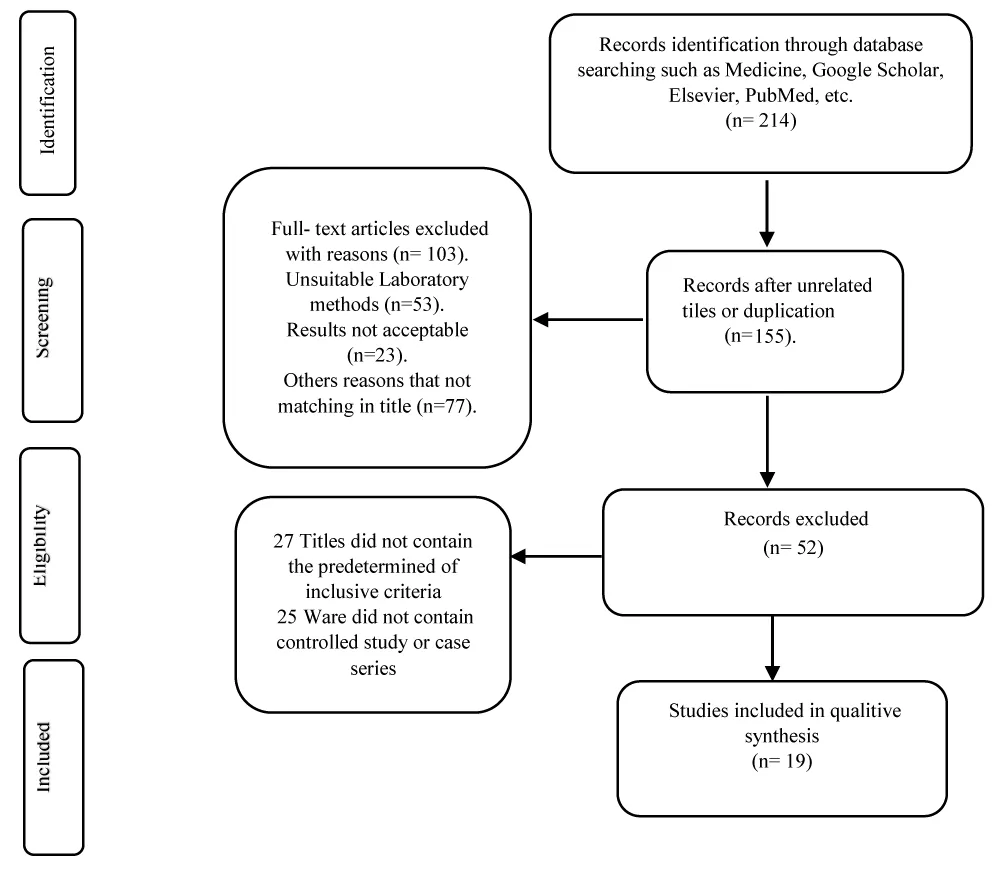
Figure 1: Flowchart of data extraction and search strategy finding.
BLT and removal of metals
Past and new studies indicated that repeated BL affected hemochromatosis in blood, and several metals and liver function tests (Table 1) showed the results to be important, while serum iron declines, the effect on other metals, if any, is generally an increase in serum or whole blood levels (Table 2).
Table 1: Relationship among variable. Correlation (Spearman’s rho coefficients) of serum with Hb and |
|||||||
| Ferritin | BL | n | Hb | Creatinine | GGT | ALT | ALP |
| NO | 28 | 0.439* | 0.477 | 0.610** | 0.791** | 0.351 | |
| Yes | 28 | 0.294 | -0.407* | 0.356 | -0.262 | -0.192 | |
| Control | 21 | 0.515* | 0.168 | 0.468* | 0.410 | 0.593** | |
*p < 0.05; **p < 0.01. The significant p values have been highlighted in bold fonts. |
|||||||
| Table 2: The relationship of the among variables. The relationship (Spearman’s rho coefficients) between trace metal concentrations in patients before and after BL and in the control group [11]. |
||||
| BL? | Hg(n)! | Cd(n)! | ||
| Blood | Pb | No | 0.514*(22) | 0.407(18) |
| Yes | 0.182(22) | 0.448 | ||
| Control | 0.688**(16) | 0.922**(8) | ||
| Hg | No | 0.159(15) | ||
| Yes | -0.388(16) | |||
| Control | 0.760(7) | |||
| Urine | Pb | NA | NA | 0.454(15) |
| NA | NA | 0.674**(16) | ||
| Control | 0.394(10) | 0.693*(19) | ||
| Hg | NO | NA (2) | ||
| Yes | NA (1) | |||
| Control | 0.063(9) | |||
| * p < 0.05: ** p < 0.01: ! Spearman’s rho coefficients (n); NA: Not available; Results below limit of quantification excluded the significant p values have been highlighted in bold fonts. |
||||
One of the critical points that elevated the absorption or mobilization of toxic materials in the body was an increase in Pb in C282Y homozygous patients (Table 3) than in the other patients. The measuring methods in this investigation, inductively coupled plasma mass spectrometry was used [11]. But another study modified those levels of heavy metals (Al, Zn, and Cd) after WCPT, which were significantly lower than the levels before therapy. Figure 2 indicates the graph of p - value numbers. Additionally, WCPT has an excretory effect on the kidneys. The WCPT may clear blood from excess heavy metals in this research, measured using an atomic absorption spectrophotometer [35]. Therefore, owing to various results regarding the types of metals, it is difficult to decide about 100% of the beneficial method of BLT among patients with metal toxicants.
| Table 3: Increase in Lead concentrations: correlation with pre-treatment variable. Increase in Pb concentrations in Subjects with different hemochromatosis genotypes (μmol/L) [11]. | |||
| Median | Range | n | |
| C282Y Homozygote | 0.034 | -0.004 to 0.114 | 13 |
| C282Y Heterozygote | 0.008 | 1 | |
| H63D Homozygote | 0.002 | -0.012 to 0.011 | 3 |
| H63D Heterozygote | 0.000 | 1 | |
| Compound Heterozygote | 0.024 | -0.007 to 0.063 | 8 |
| No HFE mutation | 0.026 | -0.010 to 0.062 | 2 |
| Total | 0.029 | -0.012 to 0.114 | 28 |
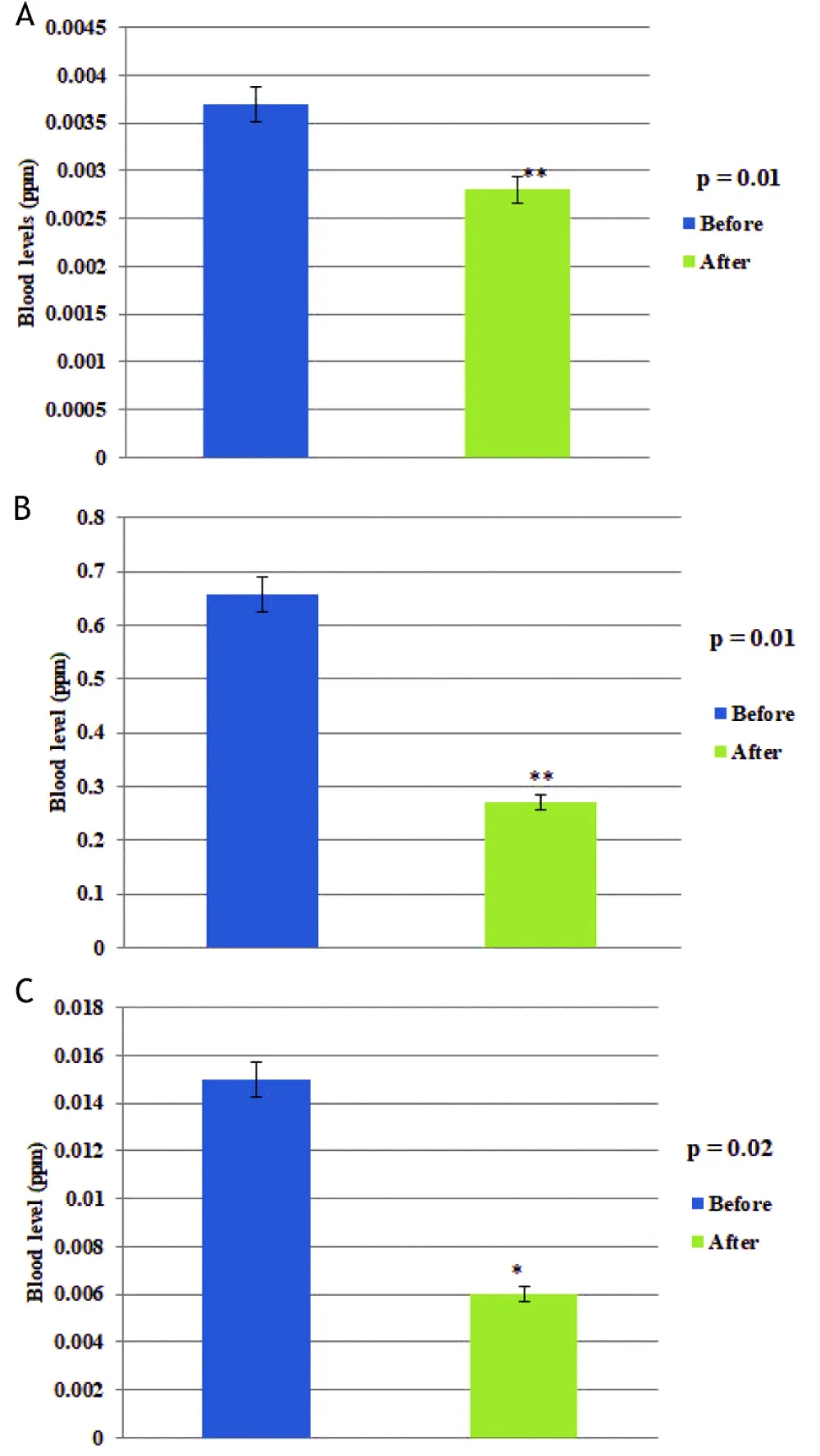
Figure 2: Venous blood levels 5 minutes before and after 30 days WCPT. (A) Al, (B) Zn, and (C) Cd [35].
BLT and lack of iron accumulation
In a case report, severe anemia required frequent blood transfusions over 5 years. One of the reasons was that the antibodies bind to erythrocytes and other abnormalities, such as ferritin and transferrin. The patient showed positive results after the episodes of BL regarding the quality of erythrocytes, ferritin, and transferrin [36].
BLT in deoxy hemoglobin and oxyhemoglobin
By employing Wavelet Phase Coherence and near-infrared spectroscopy, the study demonstrated in (Figures 3-6) the interplay of hemodynamic responses between the two cups of CP treatment. Twelve people in good health had their gastrocnemius subjected to three different negative pressure levels (-75, 225, and -300 mmHg). The results showed that under different negative pressure levels, the WPC value was significantly higher under-75 mmHg than under-225 and -300 mmHg in the neurogenic control, and the oxyhemoglobin coherence levels between the two inside-cup areas were significantly higher under the -75-mmHg condition compared than under the -300-mmHg condition in the metabolic control. Myogenic control in oxyhemoglobin was substantially lower at -75 mmHg than at -300 mmHg for wavelet amplitude values [37].
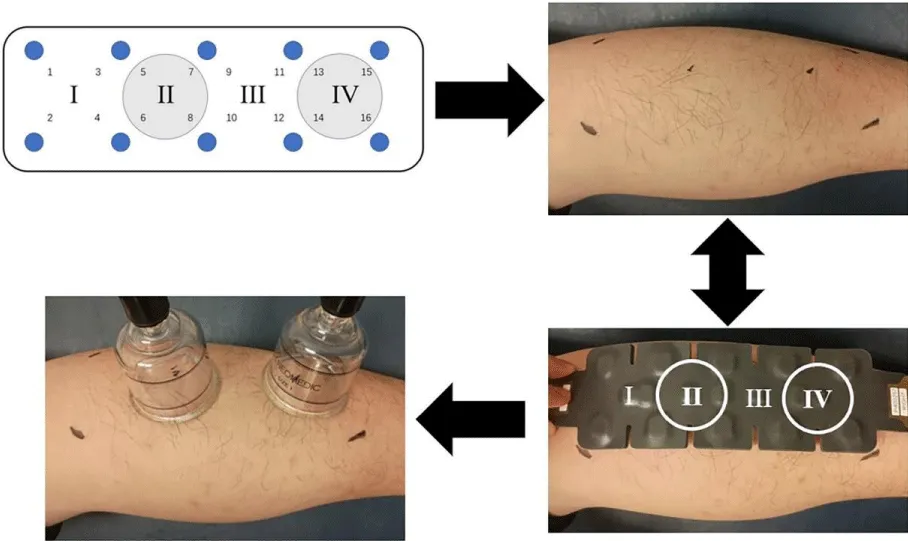
Figure 3: Images showing where the fNIRS channels are located. The images depict the regions identified in this research, which include Areas I, II, III, and IV. The other two regions are on the proximal side, and areas I and II are on the distal side. While the other two sectors are inside the cup, sectors I and III are outside. The image displays a participant’s experimental setup [37].
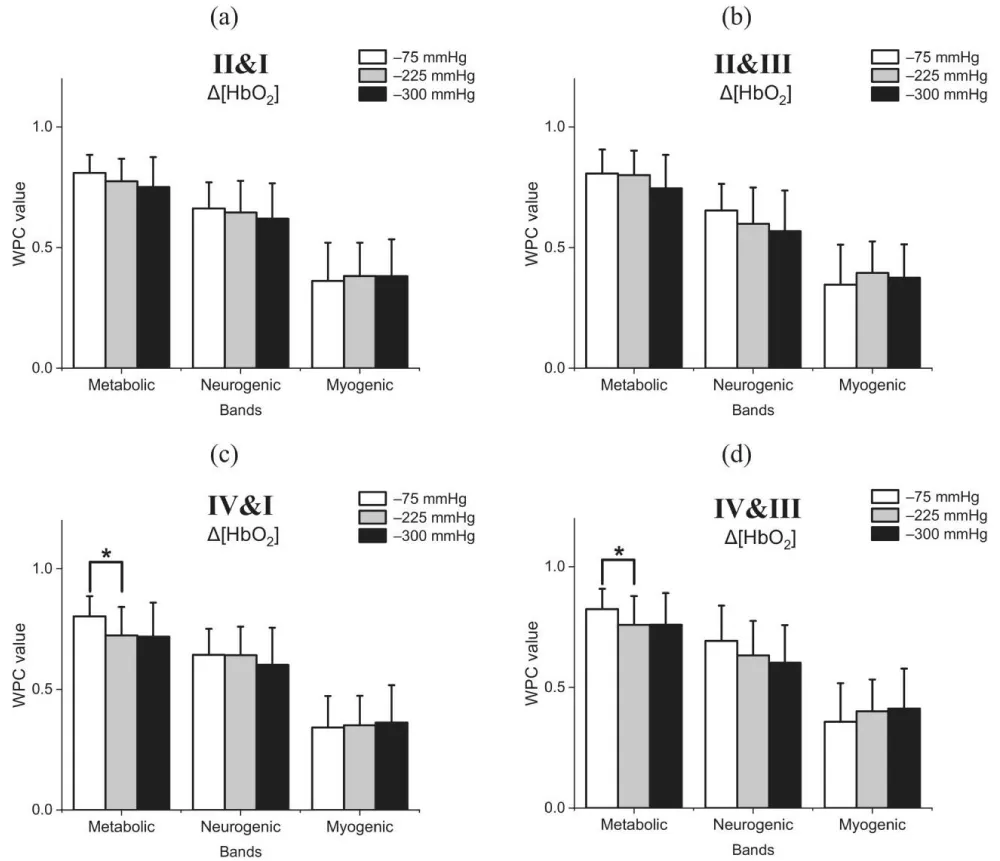
Figure 4: The WPC value for Δ[HbO2] under three pressures in metabolic endothelia, neurogenic, and myogenic controls compared to each outside-cup region. (a) and (b) display the coherence values of distant inside-cup Area II and its two-neighboring outside-cup regions. (c) and (d) display the coherence values of the other two nearby outside-cup regions as well as the proximate inside-cup Area IV. *p < 0.05 is indicated [37].
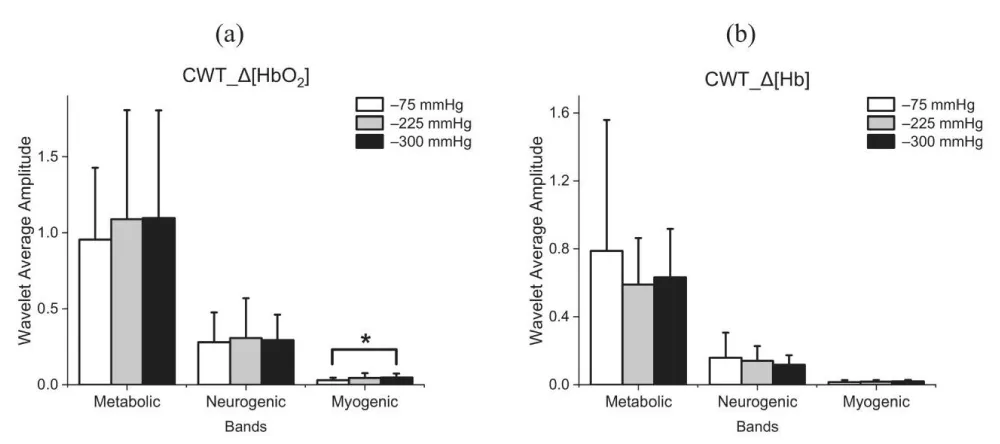
Figure 5: (a) Comparison of wavelet amplitudes of metabolic endothelia, neurogenic, and myogenic for Δ[HbO2], and (b) comparison of wavelet amplitudes of metabolic endothelia, neurogenic, and myogenic controls for Δ[Hb]. *Indicates p < 0.05 [37].
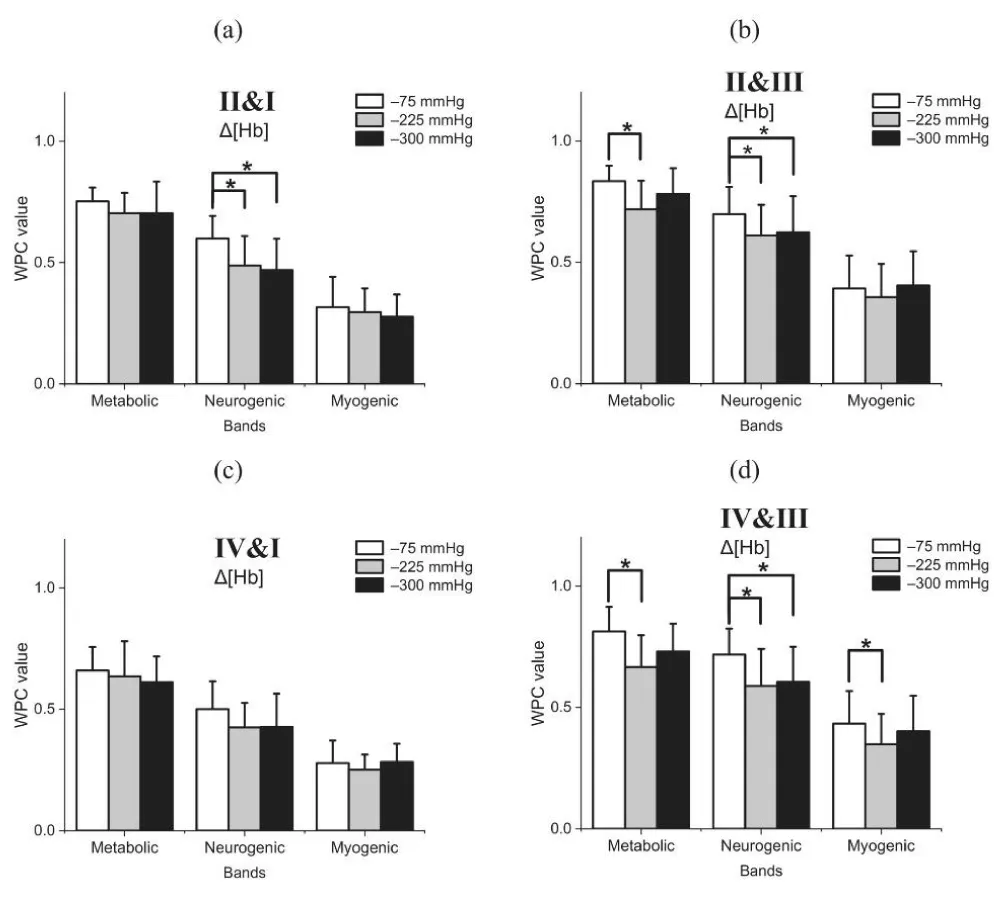
Figure 6: WPC values for Δ[Hb] under three pressures are compared between each inside-cup and outside-cup region in metabolic endothelia, neurogenic, and myogenic controls. (a) and (b) display the coherence values of distant inside-cup Area II and its two-neighboring outside-cup regions. Furthermore, (c) and (d) display the coherence values of the other two nearby outside-cup regions as well as the proximate inside-cup Area IV. * Means p is less than 0.05 [37].
Ear apex BLT affect in eye and acute stroke
Several trials have suggested that BLT could be useful as an additional treatment for acute stroke and eye drops. Cochrane risk of bias assessment tool BL at EX-HN6 (ear-apex) as an adjuvant therapy to eye drops may help style, according to the study’s statistical analysis and meta-analysis performance findings, which were conducted using RevMan 5.3 software. Higher quality randomized controlled trials are required to support the results of this investigation, because the methodological quality of the included studies was subpar [38]. Additionally, a systematic review and meta-analysis of randomized controlled trials has implicated BL at the ear apex in acute stroke. BL at the ear apex significantly improved neurological deficits measured using the National Institute of Stroke Scale (MD, -2.83; 95% CIs, -4.48 to -1.17), consciousness impairment measured using the Glasgow Coma Scale (MD, 2.75. 95% CIs, 1.72 to 3.78), and motor function measured by the Fugl-Meyer Assessment (MD, 5.31. 95% CIs, 3.04 to 7.58) in patients with acute stroke receiving standard Western medical treatment. Additionally, it considerably shortened hospital stays (MD, -7.39; 95% CIs, -8.85 -5.93) [10].
BLT and acute stroke recovery
The BLT group showed statistically significant improvements in neurological deficits when compared to the non-BL group. The evidence currently available suggests that adding BL to patients receiving conventional treatment with Western medicine for acute stroke significantly improves neurological deficits and motor function, without significantly increasing the frequency of adverse events. Therefore, BLT may be a helpful and safe adjunctive therapy for patients with acute stroke. Although BL does not enhance performance in activities of daily life, it did work well for a small sample of patients whose strokes began within three days. The results of the subgroup analysis offer additional information about several of variables that might affect BL efficacy stroke types (ischemic stroke) linked to improvements in the overall effective rate of neurological deficits, sufficient frequency of intervention (number of treatment sessions ≥ five days per week) to improve the motor power of the lower extremities, and sufficiently high intervention doses (treatment period > one week and total sessions > ten times) for improvement in neurological deficits measured using the National Institute of Health Stroke Scale or Chinese Stroke Scale [39].
BLT and Meniere’s disease
Sensor neural hearing loss, tinnitus, and vertigo are the three primary symptoms of Meniere’s illness, a set of conditions. Symptoms usually start at maturity, and their underlying etiology remains unclear. BL demonstrated favorable results. When receiving medical care for Meniere’s illness, the patient claimed that the frequency and severity of their symptoms decreased over the course of two years of monthly CPT treatments, eventually leading to their elimination [4].
BLT and rheumatoid arthritis
Exosomes are found in bodily fluid samples from patients with rheumatoid arthritis treated with oxhorn cupping, and the effectiveness of BLT in treating this condition is dependent on these samples. The findings also suggest that Oxhorn CPT may have therapeutic benefits for rheumatoid arthritis by targeting many protein targets and signaling pathways. According to transmission electron microscopy pictures and proteomics analysis of body fluid exosomes, the average size of exosomes in the bodily fluid of patients with rheumatoid arthritis who received oxhorn CPT was 76.13 nm (5.27E+10 /mL). Exosomes from bodily fluids were found to have positive CD9, CD63, and CD8 levels on their surface. Between the pretreatment and post-treatment phases, 300 DEPs were found, 242 of which were down-regulated and 58 were up-regulated. According to a Kyoto Encyclopedia of Genes and Genomes pathway study, DEPs are mostly associated with signal transduction, extracellular region, focal adhesion, protein binding, and posttranslational modification. DEPs were significantly enriched in the PI3K-Akt pathway and focal adhesions. Protein-protein interaction network analysis identified ten DEGs (ITGA5, ITGA4, ENG, MMP14, SERPINH1, THY1, TAGLN, ITGA1, IGF1, and ITGB5) as target genes. According to an enzyme-linked immunosorbent test serum levels of CDK1, ITGA5, ITGB5, and CD44 decreased somewhat during and after therapy [40].
BLT and mental pains in patients with migraine
In addition to demonstrating that patients in the WCPT had significantly lower mean values of physiological (0.42 vs. 3.39; p < .001) and mental pain (1.60 vs. 3.06; p < .001) than patients in the control group (Table 4), BLT in the study also showed that mental pain in the WCPT controlled physiological pain. The mean physiological pain score dropped from 6.97 (baseline) to 0.73 (10 minutes) and 0.63 (1 month; p < .001), while the mean mental pain score dropped from 3.76 (baseline) to 0.71 (10 minutes) and 1.71 (1 month; p < .001) in the WCPT patients. There was a substantial decrease in the mean values of both mental and physiological aches (from 3.48 to 3.06; p = .0044 and 7.80 to 3.39; p < .001, respectively). At the posttest, both the control group (r = 0.5471; p = .0002) and the WCPT group (r = 0.3814; p = .0412) showed a substantial decrease in the degree of mental pain severity, which in turn led to a significant drop in the level of physiological pain severity. Furthermore, the WCP group was visible at the 10-minute and 1-month points. It is interesting to note that sleeping hours were passively connected with physiological pain intensity in the BLT, but mental pain severity predicted physiological pain severity in the control group [25].
| Table 4: Comparison of physiological and mental pains between the control and WCPT therapy groups at baseline and 1- mo. [25]. | ||||
| Study groups no (%) | ||||
| Baseline | Control (n = 41) | WCPT(n = 31) | Mean diff (95%Cl); RR (99%CL) | p (2-sided) |
| Physiological pain severity means (SD) | 7.80(2.17) | 6.84(2.75) | -0.97 (-2.12 to 0.19) | 0.0998 |
| Physiological pain | ||||
| Minor pain | 2(4.88) | 5(16.13) | Ref | |
| Moderate pain | 7(17.07) | 9(29.03) | 0.79 (0.42 - 1.49) | 0.6570 |
| Severe pain | 32(78.05) | 17(54.84) | 0.49 (0.27 - 0.89) | 0.986 |
| Mental pain severity means (SD) | 3.48(0.85) | 3.76(0.95) | 0.29 (-0.139 to 0.71) | 0.1841 |
| 1 mo. | Control (n = 41) | WCPT(n = 31) | Mean diff (95%Cl) RR (99%CL) |
p (2-sided) |
| Physiological pain severity means (SD) | 3.39 (2.65) | 0.42(0.58) | -2.97 (-4.02 to -1.91) | <0.0001 |
| Physiological pain | ||||
| No pain | 5 (12.20) | 16(53.33) | Ref | |
| Minor pain | 22 (53.66) | 12(40.00) | 0.46 (0.28 - 0.77) | 0.0052 |
| Moderate pain | 6 (14.63) | 1 (3.33) | 0.19 (0.03 - 1.17) | 0.0069 |
| Severe pain | 8(19.51) | 1(3.33) | 0.15 (0.02 - 0.94) | 0.0016 |
| Mental pain severity means (SD) | 3.06(0.97) | 1.60(0.50) | -1.46 (-1.85 to -1.06) | <0.0001 |
| SD: Standard Division | ||||
BLT and metabolic syndrome
In individuals with metabolic syndrome, BLT can be regarded as a safe and efficient supplemental strategy for lowering low-density lipoprotein cholesterol level, body weight, body mass index, and waist circumference. The meta-analysis found statistically significant differences between the CPT and control groups in waist circumference (MD = -6.07, 95% CI: -8.44, -3.71, p < .001, I2 = 61%, τ2 = 3.4), body weight (MD = -2.46, 95% CI: -4.25, -0.68, p = .007, I2 = 0%, τ2 = 0), and body mass index (MD = -1.26, 95% CI: -2.11 to -0.40, p = .004, I2 = 0%, τ2 = 0). Blood pressure and total fat percentage, did not show any significant changes. In terms of biochemical markers, cupping had no significant effect on total cholesterol, triglycerides, high-density lipoprotein cholesterol, fasting blood glucose, or high-sensitivity C-reactive protein, but significantly reduced the concentration of low-density lipoprotein cholesterol (MD = -3.98, 95% CI: -6.99, -0.96, p = .010, I2 = 0%, τ2 = 0). No adverse events were observed in the three RCTs, additionally, the researcher stated that this group must evaluate the safety and effectiveness of CPT [41].
BLT and anti-obesity
BLT Improvements in hip circumference (p = .03), waist circumference (p < .001), body weight (p < .001), and body mass index (p < .001), were observed in 21 randomized controlled trials that were part of the systematic review and meta-analysis. However, neither the body fat percentage (p = .90) nor the waist-hip ratio (p = .65), which both had extremely low confidence of evidence, showed any clinically relevant alterations. No recorded negative incident results were observed. Furthermore, CPT is a safe intervention for the treatment of obesity and may be utilized to treat obesity in terms of body weight, body mass index, hip circumference, and waist circumference. However, it was noted that due to the ambiguous quality of the included studies, they should be taken cautiously in clinical practice [14].
BLT and hand twelve jing-well points on cerebral edema
By preserving the tight junctions of the blood-brain barrier, the BLT in the hand’s 12 Jing-well sites may help reduce cerebral edema caused by ischemic stroke. According to a study on BLT, ischemic stroke can lower the water content and blood-brain barrier permeability of the brain. Electron microscopy revealed that, the BL puncture group had improved tight connections. Subsequent research revealed that the expression levels of occluding and claudin-5 were up-regulated in the BL group, whereas ICAM-1 and VEGF were down-regulated, in contrast to those in the permanent middle cerebral artery occlusion group. Therefore, BL puncture therapy at 12 Jing-well locations may be a viable treatment option for acute ischemic stroke [42].
BLT and adult-onset asthma
BLT may be a useful therapeutic approach to help asthma sufferers with respiratory issues. At the start of the trial, there was no discernible difference in the outcomes between the control and intervention groups (p = 0.06). Before BLT, the intervention group’s mean total treatment score was 11.44; eight weeks after the intervention, it climbed significantly to 24.24 (p < 0.001). However, in the first week, the intervention group’s mean total treatment score was considerably greater than that of the control group’s (p < 0.001). Furthermore, the satisfaction level of the BLT and control groups at the end of the experiment was 7.48 and 4.53, respectively (p < 0.001). According to the findings of these studies, WCPT may be a useful therapeutic approach for reducing respiratory problems in patients with asthma [17].
BLT and low back pain
Using randomized control trials and high-quality data, systematic analysis and meta-analysis showed that BLT significantly reduced pain at the 2- to 8-week endpoint intervention (d = 1.09, 95% CI: [0.35–1.83], p = 0.004). At one month (d = 0.11, 95% CI: [- 1.02–1.23], p = 0.85), and three to six months (d=0.39, 95% CI: [- 0.09–0.87], p = 0.11), no consistent improvement in discomfort was noted. At the endpoint intervention, DC did not reduce pain (d = 1.06, 95% CI: [- 0.34, 2.45], p = 0.14) compare to WCP (d = 1.5, 95% CI: [0.39–2.6], p = 0.008). There was no proof that various forms of BLT were associated with pain alleviation (p = 0.2). BLT did not improve non-specific chronic low back pain (d = 0.27, 95% CI: [- 1.69– 2.24], p = 0.78) or chronic low back pain (d = 0.74, 95% CI: [- 0.67–2.15], p = 0.30) at the endpoint intervention, according to moderate-to-medium-quality evidence. Compared to the lower back area (d = 0.35, 95% CI: [- 0.29–0.99], p = 0.29), BLT on acupoints demonstrated a substantial improvement in pain (d = 1.29, 95% CI: [0.63–1.94], p < 0.01). There was a possible correlation (p = 0.05) between pain decrease and several BLT locations. Compared to drug therapy (n = 8; d = 1.8 [95% CI: 1.22 – 2.39], p < 0.001) and standard care (n = 5; d = 1.07 [95% CI: 0.21- 1.93], p = 0.01), a meta-analysis revealed a substantial impact on pain improvement. According to the two investigations, BL significantly moderated emotional and sensory pain at the beginning, 24h later, and two weeks after the intervention (d = 5.49, 95% CI [4.13–6.84], p < 0.001). At the 1- to 6-month follow-up, there was moderate evidence showed that cupping reduced disability (d = 0.67, 95% CI: [0.06–1.28], p = 0.03). At the 2–8-week endpoint, no immediate effect was observed (d = 0.40, 95% CI: [- 0.51–1.30], p = 0.39). The subgroup analysis revealed a high level of heterogeneity (I2 >50%). Because of the numerous mentioned above, it is impossible to accept that CPT is a valid treatment for pain [43].
In here reviewed some diseases and found various effects of results in different diseases. BLT was studied in the same articles on various diseases and analyzed methods such as: acute ischemic stroke mixed method research, which includes multi-center, superiority, randomized controlled clinical trial, focus group interview [44], and acute stroke recovery by systematic review and meta-analysis [39]. The Cochrane Handbook for Systematic Reviews of Interventions contains just a few of the numerous studies that have been conducted in recent years regarding BLT [8].
The randomized control trials indicated that DC, WC, and medical the results, and indicated that possible correlation (p = 0.05) between pain decrease and several BLT locations existed. Compared to drug therapy (n = 8; d = 1.8 [95% CI: 1.22 – 2.39], p < 0.001) and standard care (n = 5; d = 1.07 [95% CI: 0.21- 1.93], p = 0.01) [43]. Studies have shown that it can reduce the water content of the brain and permeability of the blood-brain barrier caused by ischemic stroke [42]. Analysis of metals in blood circulations demonstrated that Pb was higher in C282Y homozygous patients after BLT, while serum iron declined. The effect on other metals, if any, is generally an increase in serum or whole blood levels by association inductively coupled plasma mass spectrometry [11]. However, another study modified those levels of heavy metals by p values such as (Al; p = 0.01) (Zn; p = 0.01), and (Cd; p = 0.02) after WCPT were significantly lower than the levels before therapy [35].
In metabolism of body BLT has good relationship which indicated that CPT is a safe intervention for the treatment of obesity and may be utilized to treat obesity in terms of body weight, body mass index, hip circumference, and waist circumference, and results of BLT improvements in hip circumference (p = .03), waist circumference (p < .001), body weight (p < .001), and body mass index (p < .001) were seen in 21 randomized controlled trials that were part of the systematic review and meta-analysis [14].
Using Wavelet Phase Coherence and near-infrared spectroscopy, at different negative pressure levels, the results indicated that under different negative pressure levels, the WPC value was higher under-75 mmHg than under -225 and -300 mmHg in the neurogenic control, and the oxyhemoglobin coherence levels between the two inside-cup areas were significantly higher under the -75-mmHg condition compared than under the -300-mmHg condition in the metabolic control. The myogenic control of oxyhemoglobin was substantially lower at -75 mmHg than at -300 mmHg for the wavelet amplitude values [37].
Qualitative analysis
The two distinct qualitative results are related to different diseases and conditions. The first study found that an effective supplemental strategy for lowering low-density lipoprotein cholesterol, body mass index, and waist circumference has a positive effect on removing illness factors such as the removal of metals such as Zn, Cd, and Al from blood cycles, overweight, mental pain, and permeability of the blood-brain barrier caused by ischemic stroke. The second finding was that it increased disease factors, such as the reduction of iron overload in the blood cycle, increasing the absorption of Pb, and total fat percentage, but did not show any notable changes. Biochemical indicators such as total cholesterol, triglycerides, high-density lipoprotein cholesterol, fasting blood glucose, and high-sensitivity C-reactive protein were not significantly affected by cupping.
In conclusion, BLT in different diseases and as the different Laboratory results of different studies, indicated that BLT is an acceptable method in a few diseases; however, for more clarity, validation needs to have additional and more investigation. Researchers should also approve each treatment with observation of more studies and analyses under different conditions to determine the acceptable role or methods for different treatments of various illnesses.
Data availability statement
The data presented in this study are openly available in Science Direct, Google Scholar, PubMed, Laboratory Hematology and other international journals.
- World Health Organization. Anaemia in women and children. Geneva: World Health Organization; 2021. Available from: https://www.who.int/data/gho/data/themes/topics/anaemia_in_women_and_children
- Dergaa I, Ghram A, Romdhani M, Souissi A, Ammar A, Farahat RA, et al. Does wet-cupping therapy improve repeated sprint ability, perceived wellness, and rating of perceived exertion in young active males? Sports Med Health Sci. 2024;6(4):378-384. Available from: https://doi.org/10.1016/j.smhs.2023.09.007
- Al-Tabakha MM, Sameer FT, Saeed MH, Batran RM, Abouhegazy NT, Farajallah AA. Evaluation of bloodletting cupping therapy in the management of hypertension. J Pharm Bioallied Sci. 2018;10(1):1-6. Available from: https://doi.org/10.4103/jpbs.jpbs_242_17
- Jamal TS, Aseri KS, Alghamdi FS, Asiri AM, Hakami AS. Cupping therapy as a potential complementary treatment for Meniere's disease: a case report. Cureus. 2024;16(3):e55864. Available from: https://doi.org/10.7759/cureus.55864
- Ma X, Li D, Zhao M, He J, Yang F, Kong J. Bloodletting cupping combined with conventional measures therapy for psoriasis: a systematic review and meta-analysis of randomized controlled trials. Front Med (Lausanne). 2023;10:1132928. Available from: https://doi.org/10.3389/fmed.2023.1132928
- Wang YY, Fan HW, Huang XM, Jiao Y. Disseminated Staphylococcus aureus infection after scarification wet cupping therapy: a case report and literature review. BMC Complement Med Ther. 2023;23(1):94. Available from: https://doi.org/10.1186/s12906-023-03932-x
- Dai M, Suzuki K, Sato H, Tabata S, Kume H, Nishikata M, et al. Intracranial mycotic aneurysm rupture following cupping therapy. Surg Neurol Int. 2024;15:119. Available from: https://doi.org/10.25259/sni_99_2024
- Yao Q, Zhang X, Mu Y, Liu Y, An Y, Zhao B. Bloodletting therapy for treating patients with chronic urticaria: a systematic review and meta-analysis protocol. Medicine (Baltimore). 2019;98(7):e14541. Available from: https://doi.org/10.1097/md.0000000000014541
- Mo PC, Lin CF, Li Y, Hernandez ME, Liao JC, Hung IY, et al. Application of near-infrared spectroscopy to assess the effect of the cupping size on the spatial hemodynamic response from the area inside and outside the cup of the biceps. PLoS One. 2024;19(5):e0302828. Available from: https://doi.org/10.1371/journal.pone.0302828
- Kim M, Han CH. Bloodletting at the ear apex for acute stroke: a systematic review and meta-analysis of randomized controlled trials. Medicine (Baltimore). 2024;103(49):e40694. Available from: https://doi.org/10.1097/md.0000000000040694
- Yazdani M, Distante S, Mørkrid L, Ulvik RJ, Bolann BJ. Bloodletting in hemochromatosis results in increased blood lead (Pb) concentrations. Biol Trace Elem Res. 2023;201(7):3193-3201. Available from: https://doi.org/10.1007/s12011-022-03424-y
- Hou X, Bai ZM, Liu JM. Physiological mechanisms and clinical research progress of cupping therapy. Zhen Ci Yan Jiu. 2021;46(3):254-258. Available from: https://doi.org/10.13702/j.1000-0607.200334
- Vaccaro M, Coppola M, Ceccarelli M, Montopoli M, Guarneri C. The good and the bad of cupping therapy: case report and review of the literature. Eur Rev Med Pharmacol Sci. 2021;25(5):2327-2330. Available from: https://doi.org/10.26355/eurrev_202103_25266
- Kang D, Shin WC, Kim T, Kim S, Kim H, Cho JH, et al. Systematic review and meta-analysis of the anti-obesity effect of cupping therapy. Medicine (Baltimore). 2023;102(24):e34039. Available from: https://doi.org/10.1097/md.0000000000034039
- Okada M, Nakazato Y, Yamaguchi T, Tominaga E, Yamamoto T. Infectious endocarditis with subarachnoid hemorrhage and cerebral infarction in an atopic dermatitis patient during unsanitary cupping therapy. Cureus. 2024;16(10):e71599. Available from: https://doi.org/10.7759/cureus.71599
- Al Saadi W, Al Balushi AS, Al Mukhaldi A, Al Farhan H, Al Alawi AM. Wet-cupping's impact on pancreatitis induced by hypertriglyceridemia: a case study and brief literature review. Sultan Qaboos Univ Med J. 2024;24(4):581-584. Available from: https://doi.org/10.18295/squmj.3.2025.025
- Joushan A, Hatami HR, Agin K, Mohammadi Kenari H, Sadeghi S, Choopani R. The effect of wet cupping therapy on the clinical symptoms of adult-onset asthma: a randomized clinical trial. Turk J Med Sci. 2024;54(4):838-846. Available from: https://doi.org/10.55730/1300-0144.5855
- Viuff D, Barrowcliffe T, Saugstrup T, Ezban M, Lillicrap D. International comparative field study of N8 evaluating factor VIII assay performance. Haemophilia. 2011;17(4):695-702. Available from: https://doi.org/10.1111/j.1365-2516.2010.02481.x
- Shahamat M, Daneshfard B, Najib KS, Dehghani SM, Tafazoli V, Kasalaei A. Dry cupping in children with functional constipation: a randomized open label clinical trial. Afr J Tradit Complement Altern Med. 2016;13(4):22-28. Available from: https://doi.org/10.21010/ajtcam.v13i4.4
- Kordafshari G, Ardakani MRS, Keshavarz M, Esfahani MM, Nazem E, Moghimi M, et al. The role of phlebotomy (fasd) and wet cupping (hijamat) to manage dizziness and vertigo from the viewpoint of Persian medicine. J Evid Based Complementary Altern Med. 2017;22(3):369-373. Available from: https://doi.org/10.1177/2156587216672757
- Moura CC, Chaves ÉCL, Cardoso A, Nogueira DA, Corrêa HP, Chianca TCM. Cupping therapy and chronic back pain: systematic review and meta-analysis. Rev Lat Am Enfermagem. 2018;26:e3094. Available from: https://doi.org/10.1590/1518-8345.2888.3094
- Kim S, Lee SH, Kim MR, Kim EJ, Hwang DS, Lee J, et al. Is cupping therapy effective in patients with neck pain? A systematic review and meta-analysis. BMJ Open. 2018;8(11):e021070. Available from: https://doi.org/10.1136/bmjopen-2017-021070
- Michalsen A, Bock S, Lüdtke R, Rampp T, Baecker M, Bachmann J, et al. Effects of traditional cupping therapy in patients with carpal tunnel syndrome: a randomized controlled trial. J Pain. 2009;10(6):601-608. Available from: https://doi.org/10.1016/j.jpain.2008.12.013
- Li JQ, Guo W, Sun ZG, Huang QS, Lee EY, Wang Y, et al. Cupping therapy for treating knee osteoarthritis: evidence from systematic review and meta-analysis. Complement Ther Clin Pract. 2017;28:152-160. Available from: https://doi.org/10.1016/j.ctcp.2017.06.003
- Abdulah DM, Younis HA, Mustafa ZR. Role of wet-cupping therapy in physiological and mental pains in patients with migraine: a quasi-clinical trial. Medicine (Baltimore). 2024;103(5):e37055. Available from: https://doi.org/10.1097/md.0000000000037055
- Aboushanab TS, AlSanad S. Cupping therapy: an overview from a modern medicine perspective. J Acupunct Meridian Stud. 2018;11(3):83-87. Available from: https://doi.org/10.1016/j.jams.2018.02.001
- Danyali F, VaezMahdavi M, Ghazanfari T, Naseri M. Comparison of the biochemical, hematological, and immunological factors of cupping blood with normal venous blood. Physiol Pharmacol. 2009;13:78-87. Available from: https://www.researchgate.net/publication/286909565_Comparison_of_the_biochemical_hematological_and_immunological_factors_of_cupping_blood_with_normal_venous_blood
- Al-Bedah AMN, Elsubai IS, Qureshi NA, Aboushanab TS, Ali GIM, El-Olemy AT, et al. The medical perspective of cupping therapy: effects and mechanisms of action. J Tradit Complement Med. 2019;9(2):90-97. Available from: https://doi.org/10.1016/j.jtcme.2018.03.003
- Jonklaas J, Bianco AC, Bauer AJ, Burman KD, Cappola AR, Celi FS, et al. Guidelines for the treatment of hypothyroidism: prepared by the American Thyroid Association task force on thyroid hormone replacement. Thyroid. 2014;24(12):1670-1751. Available from: https://doi.org/10.1089/thy.2014.0028
- Gok S, Kazanci F, Erdamar H, Gokgoz N, Hartiningsih S, Dane S. Is it possible to remove heavy metals from the body by wet cupping therapy (Al-hijamah)? Indian J Tradit Knowl. 2016;15:700-704. Available from: https://www.researchgate.net/publication/309266842_Is_it_possible_to_remove_heavy_metals_from_the_body_by_wet_cupping_therapy_Al-hijamah
- WHO TCTR. Classification of glucose-6-phosphate dehydrogenase (G6PD). Geneva: World Health Organization; [cited 2026 Mar 23].
- Ersoy S, Benli AR. Continue or stop applying wet cupping therapy (al-hijamah) in migraine headache: a randomized controlled trial. Complement Ther Clin Pract. 2020;38:101065. Available from: https://doi.org/10.1016/j.ctcp.2019.101065
- Landau MB, Abdelmaksoud A, Hussein MH, Jishu JA, Fawzy MS, Toraih EA, et al. Reviving ancient therapeutics in modern medicine: an immunological and biological narrative review of wet cupping in the management of Hashimoto's thyroiditis. Gland Surg. 2024;13(7):1291-1304. Available from: https://doi.org/10.21037/gs-24-173
- Kui W, Xie L, Li Y, Gu Z, Liu S, Xue C, et al. Efficacy and safety of bloodletting puncture and cupping in postherpetic neuralgia: a systematic review and meta-analysis. Biomed Rep. 2024;20(2):30. Available from: https://doi.org/10.3892/br.2023.1718
- Umar NK, Tursunbadalov S, Surgun S, Welcome MO, Dane S. The effects of wet cupping therapy on the blood levels of some heavy metals: a pilot study. J Acupunct Meridian Stud. 2018;11(6):375-379. Available from: https://doi.org/10.1016/j.jams.2018.06.005
- Hasle H, Frost L, Johansen KB, Jørgensen GH. Bloodletting as medical child abuse revealed by lack of iron accumulation despite multiple erythrocyte transfusions. Pediatr Blood Cancer. 2025;72(5):e31612. Available from: https://doi.org/10.1002/pbc.31612
- Huang L, Mo PC, Samadi M, Shen WC, Yu H, Hernandez M, et al. Wavelet phase coherence analysis of oxyhemoglobin and deoxyhemoglobin oscillations to investigate the relationship between cups of cupping therapy. J Biophotonics. 2025;18(1):e202400337. Available from: https://doi.org/10.1002/jbio.202400337
- Qiao HW, Liu NW, Wang J, Huang S, Yu L, Chen Z. Bloodletting at EX-HN6 as an adjunctive therapy to eye drops for stye: a meta-analysis. Medicine (Baltimore). 2020;99(32):e21555. Available from: https://doi.org/10.1097/md.0000000000021555
- Kim M, Han C. Bloodletting for acute stroke recovery: a systematic review and meta-analysis. Healthcare (Basel). 2024;12(20). Available from: https://doi.org/10.3390/healthcare12202060
- Leng D, Chimedtseren C, Wang T, Su R, Bao S, Mo X, et al. Proteomics analysis of body fluid exosomes of rheumatoid arthritis patients who underwent oxhorn cupping therapy. PLoS One. 2024;19(12):e0311526. Available from: https://doi.org/10.1371/journal.pone.0311526
- Wu LK, Chen YC, Hung CS, Yen CY, Chang Chien CY, Ciou JR, et al. The efficacy and safety of cupping as complementary and alternative therapy for metabolic syndrome: a systematic review and meta-analysis. Medicine (Baltimore). 2023;102(13):e33341. Available from: https://doi.org/10.1097/md.0000000000033341
- Yu N, Wang Z, Chen Y, Yang J, Lu X, Guo Y, et al. The ameliorative effect of bloodletting puncture at hand twelve Jing-well points on cerebral edema induced by permanent middle cerebral ischemia via protecting the tight junctions of the blood-brain barrier. BMC Complement Altern Med. 2017;17(1):470. Available from: https://doi.org/10.1186/s12906-017-1979-6
- Zhang Z, Pasapula M, Wang Z, Edwards K, Norrish A. The effectiveness of cupping therapy on low back pain: a systematic review and meta-analysis of randomized control trials. Complement Ther Med. 2024;80:103013. Available from: https://doi.org/10.1016/j.ctim.2024.103013
- Zeqi D, Xing L, Yueyue G, Zixiu Z, Jun T, Jing HU. Bloodletting puncture in the treatment of acute ischemic stroke: protocol for a mixed-method study of a multi-center randomized controlled trial and focus group. J Tradit Chin Med. 2023;43(6):1259-1267. Available from: https://doi.org/10.19852/j.cnki.jtcm.20221006.004